Johann Hermann Friedrich
"Fred" Spanhake
1 May 1820 - 19 March 1885

He buried a son at sea, outlived a wife, and made his living a dozen ways. Soldier's son. Constable. Baker. Goldfields man. The man who tied three families into one.
His Story
The man who married into one family,
and signed another into being.

Three generations of Spanhake men wore the same uniform — the 5th Infantry Regiment of Hanover 1Image: 🔗 A map of the old Hanover–Verden–Sylt corner of Germany, or a period image of a Hanoverian infantry regiment.
A soldier's son
Hanover, Germany · 1820
Fred Spanhake was born into a line of soldiers. His grandfather, Harmen Spanhake, served in the 5th Infantry Regiment of the army of Hanover and lived out his last years at Morsum, on the North Sea island of Sylt.His father, Johann Spanhake — born in 1772 — served in the very same regiment. And so, on 1 May 1820, Johann Herman Friedrich Spanhake came into the world at Hanover, the son and grandson of infantrymen.He was one of nine children born to Johann and his second wife, Luise Dorothea Marie Knop. The soldier's road was, in every sense, the one Fred was born onto.

They married on the water — the story goes, to avoid the fees and taxes owed on shore. 2Image: 🔗 A period painting or illustration of the St Pauli / an emigrant sailing ship of the 1840s.
A marriage made at sea
Aboard the St Pauli · December 1842
On 26 December 1842, the converted ship-of-war St Pauli weighed anchor on the Elbe at Hamburg and set sail for New Zealand, carrying around 140 German settlers. Among them were three families already bound together — the Subritzkys, the Körbers, and the Spanhakes.Fred sailed as the new husband of Sophia Dorothea "Doris" Subritzky — the daughter of the widow Sophie Subritzky, the family's matriarch. By family account, the pair married aboard almost as soon as the ship cleared Germany, timed to sidestep the fees and taxes that a wedding on land would have cost.Whatever the reason, it was on that crossing that the Spanhake name joined the Subritzky one — the first link in a chain that would eventually reach the Wageners of Maldon.

Their first son did not reach the new land. He was buried at sea, three weeks out. 3Image: 🔗 A restrained period image — a ship's deck at dawn, or open sea. (Keep it gentle; this is the page's most tender beat.)
Otto, committed to the deep
The Tasman crossing · 20 January 1843
Fred and Doris carried their baby son, Otto, aboard the St Pauli. In mid-January the child fell gravely ill, and on the night of the 20th his condition worsened.The Reverend Wohlers was woken and brought down into the dim a'tween deck, where he found the family huddled together and Sophie nursing the little boy through his convulsions.Otto died soon after. At dawn, wrapped in canvas as was the way at sea, his tiny body was committed to the deep with a short service.It was the family's first grief in a story that had barely begun — and the first of many partings Fred would come to know.

When the family couldn't speak for itself, Fred spoke for it. 4Image: 🔗 Early Nelson / German settler imagery of the 1840s (public-domain or CC)
The family's voice in Nelson
Nelson, New Zealand · 1843–1845
The St Pauli reached Nelson on 14 June 1843, and the German families set about carving a life from hard, contested land. The promised sections never properly came — the agent's contracts proved hollow — and the years that followed were the harshest the family would ever know. Through it, Fred became the family's spokesman.With Heinrich Körber unable to read or write and the young Subritzky brothers still little more than youths, it was Fred who dealt with the agents and the authorities, and who joined the settlers' repeated attempts to have their land released.In 1844, a daughter was born to Fred and Doris in Nelson — Louisa Sophia Dorothea Spanhake — a child whose own marriage, years later, would begin the Wagener line. When it became clear Nelson would never deliver, the family cut its losses: on 23 August 1845 they boarded the Palmyra and sailed for Adelaide.

A policeman's badge, then a baker's oven — Fred kept reinventing the work. 5Image: 🔗 1840s Adelaide / Klemzig German-settlement imagery, or a period South Australia Police motif.
Constable, then baker
Klemzig · Barossa · North Adelaide · 1845–1849
The family arrived in Adelaide on 21 September 1845 and first settled at the German township of Klemzig, before moving out to the Barossa Valley. In 1846 Fred took the oath as a constable in the South Australia Police, serving until he resigned on 30 November 1848.That same period brought a second surviving child — John William Henry Spanhake, born in Adelaide on 16 September 1846.When Fred left the force, he turned his hand to a new trade entirely, becoming a baker in North Adelaide — the family's bakery stood on Stanley Street, with stables behind it.It's a picture of a man who could turn to whatever the times demanded: soldier's son, settler, spokesman, policeman, baker.

In 1849, Fred was widowed. He was left with two young children and a road still ahead of him. 6Image: 🔗 something that would pair with Doris's page during this timeline
The year everything changed
North Adelaide · 1849
In 1849, Fred lost Doris. She was just 31. He was left a widower with two small children — Louisa, five, and John William Henry, three — and no choice but to keep moving.Where and how Doris died is a story the family has carried for generations — and one that recent research has quietly set straight. But that story belongs to her, and it's told on Doris's own page.

One piece of paper, signed by Fred, is where the Wagener family begins. 7Image: 🔗 Victorian goldfields / early Maldon imagery (public-domain). The 1867 Maldon Panorama is a strong candidate once we reach the Wagener page
Gold, and a signature at Maldon
Victorian goldfields → Maldon · 1851–1861
From 1851 Fred took his two children to the Victorian goldfields, and by the mid-1850s the family had come to Maldon.Family tradition remembers him as a sharp operator in these years — a man who made a fortune in the diggings and had a knack for a deal. But his most lasting mark on the family tree wasn't gold.In August 1861, his daughter Louisa — by then seventeen and working as a housemaid in the town — was to marry a young German brickmaker who had just taken over the Maldon Brick Yards: Edward Ferdinand Wagener.Because she was underage, the marriage needed her father's written consent — and Fred gave it. With that signature, the third of our three families was joined to the other two. Everything the Wagener line becomes flows from that single permission.

A publican in Ballarat, two more marriages, and a stretch of road we're still tracing. 8Image: 🔗 anything from the Ballarat / Union Hotel years. (A period image of the Union Hotel if one can be sourced.)
The Union Hotel, and the years less known
Ballarat · 1860s–1870s
After Maldon, Fred became the proprietor of the Union Hotel in Ballarat. He remarried twice in his later years.Beyond that, this stretch of his life is thin on the page — the record thins out, and this is exactly where the family can help us fill it back in. If there are names, dates, photographs or handed-down stories from Fred's Ballarat years or his later marriages, this is the chapter waiting for them.

He died where the family had put down its deepest roots — and was laid to rest among them. 9Image: 🔗 Far North NZ / Houhora / Mt Camel landscape (public-domain or CC).
Home to the far north
Awanui, Far North NZ · 1885
Fred's long road ended where the Subritzkys had made their final home. On 19 March 1885, while visiting his son John William Henry Spanhake at Awanui, north of Kaitaia in the Far North of New Zealand, Fred died.He was buried in the Subritzky family cemetery at Mt Camel — resting, at the last, alongside the family he had joined aboard a ship more than forty years before.The soldier's son from Hanover had crossed the world, buried a child at sea, outlived a wife, made and remade his living half a dozen ways, and signed the paper that began a whole new family. He came to rest among the very people that one shipboard marriage had bound him to.
Image credits
7. Portrait of John III Sobieski — unidentified painter, c.1675–1700; Palace Museum in Wilanów; via Wikimedia Commons, public domain.
All illustrations by Life Moments. Historical images credited individually above.
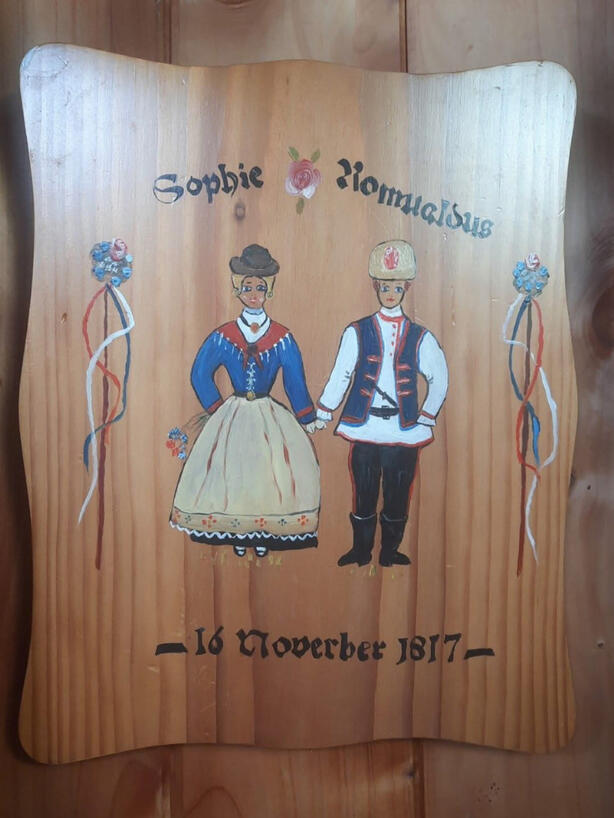
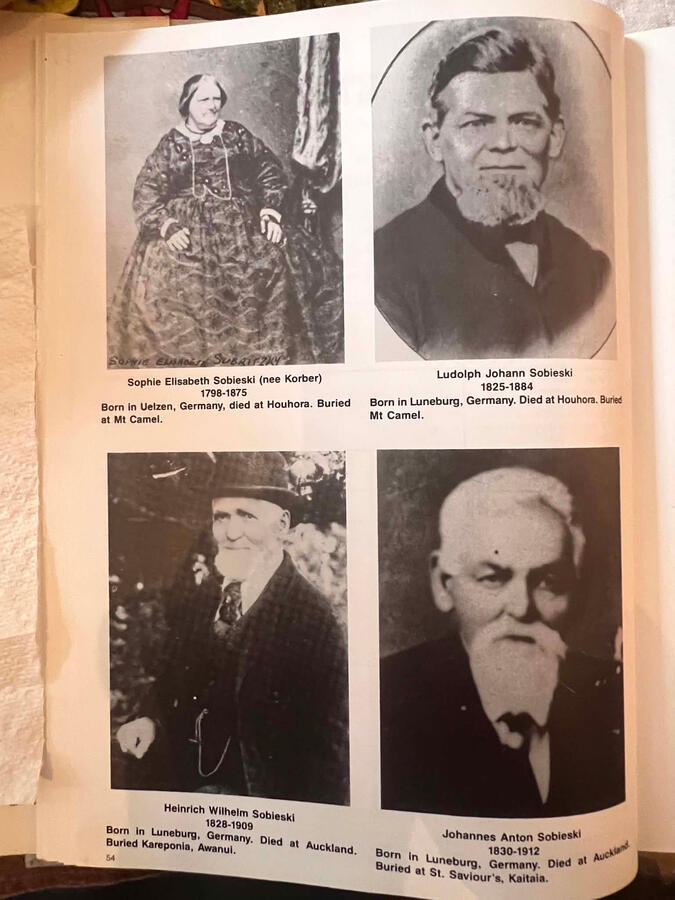
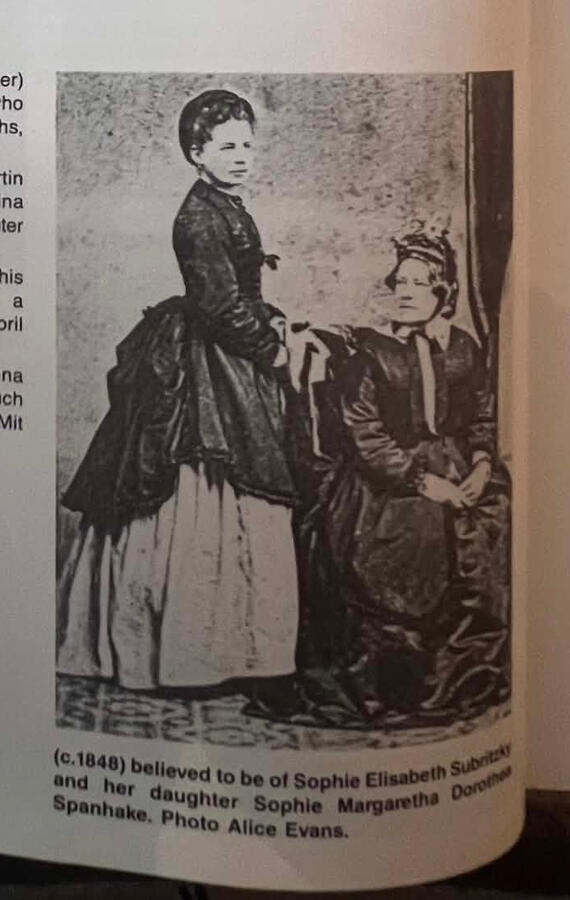
Sophie and Romualdus in traditional dress, hand-painted on their wedding date — 16 November 1817. With no photograph of Reinhold possible, this is the closest the family has to seeing them together. 4
Sophie
St Michaelis Kirche, Lüneburg · 16 November 1817
On 16 November 1817, after the banns were read on two successive Sundays, Reinhold married Sophie Elisabeth Körber at St Michael's Church in Lüneburg — joined together by Pastor Crome. He was 32, a journeyman bricklayer; she was 19, a weaver's daughter from nearby Uelzen who had lost both her parents young. The marriage record still names them both.From this union — a tradesman and an orphaned weaver's daughter, neither with a drop of the royalty the legend would later claim — came the entire family.
His Family tree
ARTEFACTS & PLACES
Hanover & the Crossing
Where he began — and the ship that carried him to the far side of the world.



A soldier's line — Fred was the son and grandson of Hanoverian infantrymen of the 5th Regiment. Before the ships and the goldfields, this was the world he was born into.
The St Pauli — the converted ship-of-war that carried Fred, Doris and baby Otto out of Hamburg in December 1842 — and on which they married at sea.
The Palmyra passenger list, 1845 — the record that names the little family together: Spanhake, Johann Heinrich Friedrich, 23 · Sophie Margarete Dorothea, 24 · Louisa, b. Nelson. Proof, in one line, of three lives on the move.
Nelson
The land that broke them — and where his daughter was born.



St Paulidorf— the swamp-bound settlement where the German families first tried to root, abandoned within two years.
Waimea Road — still in use today; built by the German settlers in the 1840s, Fred among them.
Louisa's birth, 1844 — Fred and Doris's daughter, the future Wagener matriarch, was born in Nelson. There is no official record — the birth was written only into the family Bible, as was the custom.
Adelaide
A policeman's badge, then a baker's oven.



Klemzig — the German settlement outside Adelaide where the family first landed after Nelson.
Stanley Street, North Adelaide — the bakery Fred built in 1848, with stables behind it, after he left the South Australian Police Force.
South Australia Police, 1846–48 — Fred served as a constable for two years before turning to the bakery trade.
Victoria & the Far North
Gold, a signature that made a family, and a grave among his own.




Maldon today — the goldfields town the Subritzkys helped build, where Fred came in the mid-1850s.
Louisa's marriage consent, 1861 — Louisa was underage, so her marriage to Edward Wagener needed her father's written permission. Fred's signature on that certificate is where the Wagener family begins.
The Union Hotel, Ballarat — Fred became its proprietor after Maldon. It is still standing today.
Mount Camel — the family cemetery at Houhora, where Fred was buried in 1885, among the family he had joined aboard a ship forty years before.
Image credits
6. Hand-painted wedding artwork — courtesy of Christian Subritzky, from the collection of Mike Subritzky (artist to be confirmed).
All illustrations by Life Moments. Historical images credited individually above.
Celebrating Her Life
Memorial Video
Moments that capture his spirit, humour, and the love he shared.

Zvonko Knez - A Life Remembered
Moments From His Funeral
Moments to be treasured forever.

A Song for Dida

The Haka

Grandsons' Farewell
The Legend
The Man in the Stories
Fred married into the most storied family in the Far North — a family that carried legends of Polish crowns and hidden treasure. He brought no crown. What he brought was harder to pin down, and more human: a knack for turning up, again and again, wherever a new life could be made.
1. The Hanoverian Guard
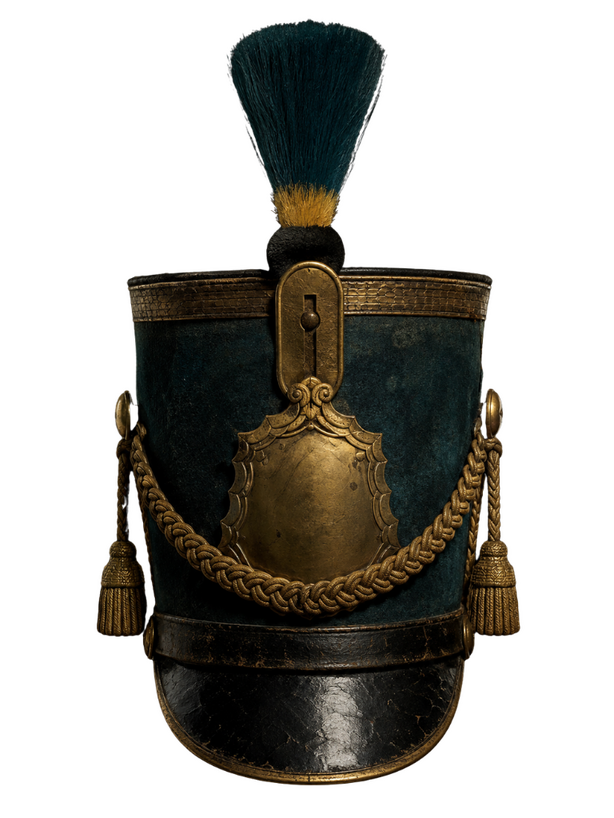
The man who won Old Sophie's daughter came from a line of Hanoverian soldiers — his father and grandfather both of the 5th Infantry Regiment. The family remembers him as the dashing guardsman who married Doris at sea, before the ship had barely cleared Germany.
2. The Wheeler-Dealer

On the goldfields, the family telling goes, Fred made his money less by digging than by dealing. It was his eye for a bargain, as much as any nugget, that's remembered as carrying the family toward Victoria — and that later set him up as landlord of the Union Hotel in Ballarat.
3. The
Vanishing
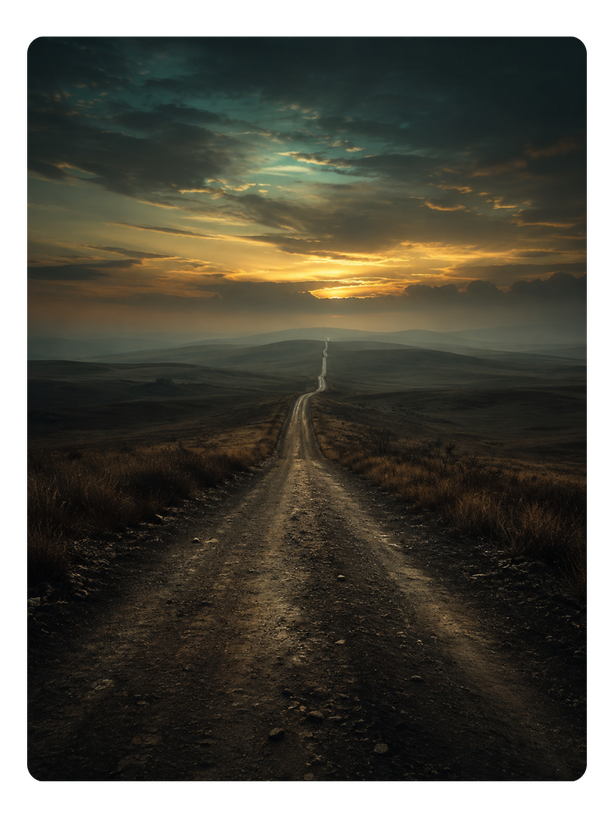
After Doris died, Fred and his two children slip out of the record for years — surfacing later a world away, two more marriages behind him. Where he went, and who those women were, the family still doesn't know.
The record is steadier than the stories. Fred was a soldier's son who became a police constable, a North Adelaide baker, a goldfields man and a Ballarat publican. The "fortune" and the dealing are the family's telling; his later years are the thinnest-documented part of his whole life. If there was ever a fortune, no ledger of it survives.His story here, has been drawn from two main works — the definitive Subritzky history, and John Anderson's Wagener research that carries the Spanhake and Wagener lines. Click either cover to read.
Subritzky Family History from
1785 to 1915
(by Stephen Subritzky)
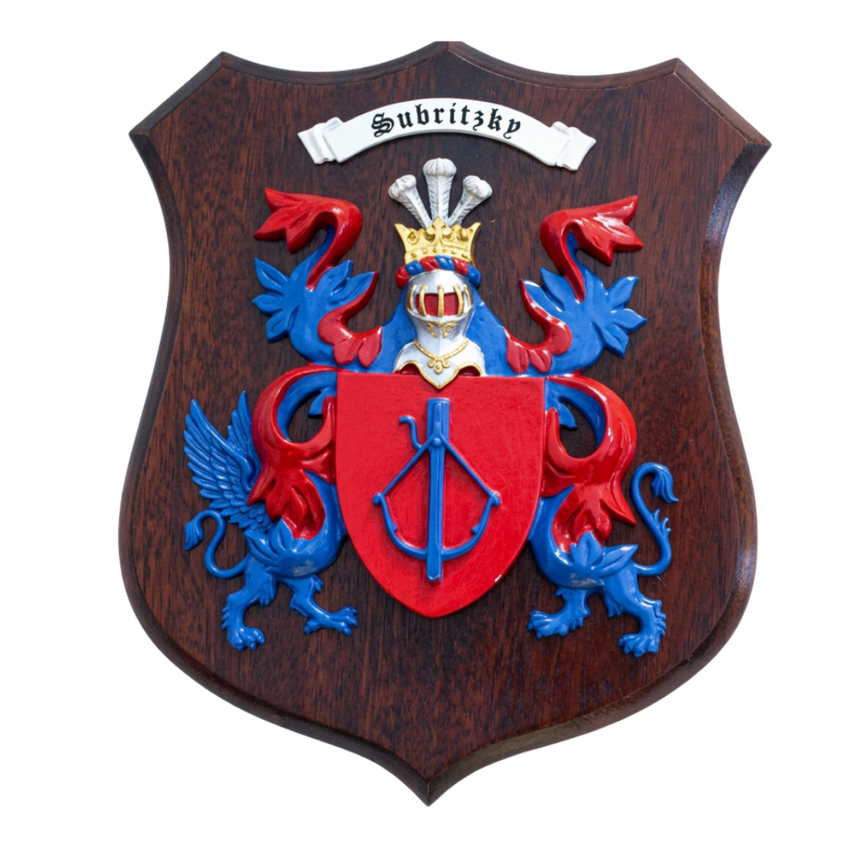
Click here 👆 to view
THE WAGENER’S
OF MALDON VICTORIA
(by John Anderson)
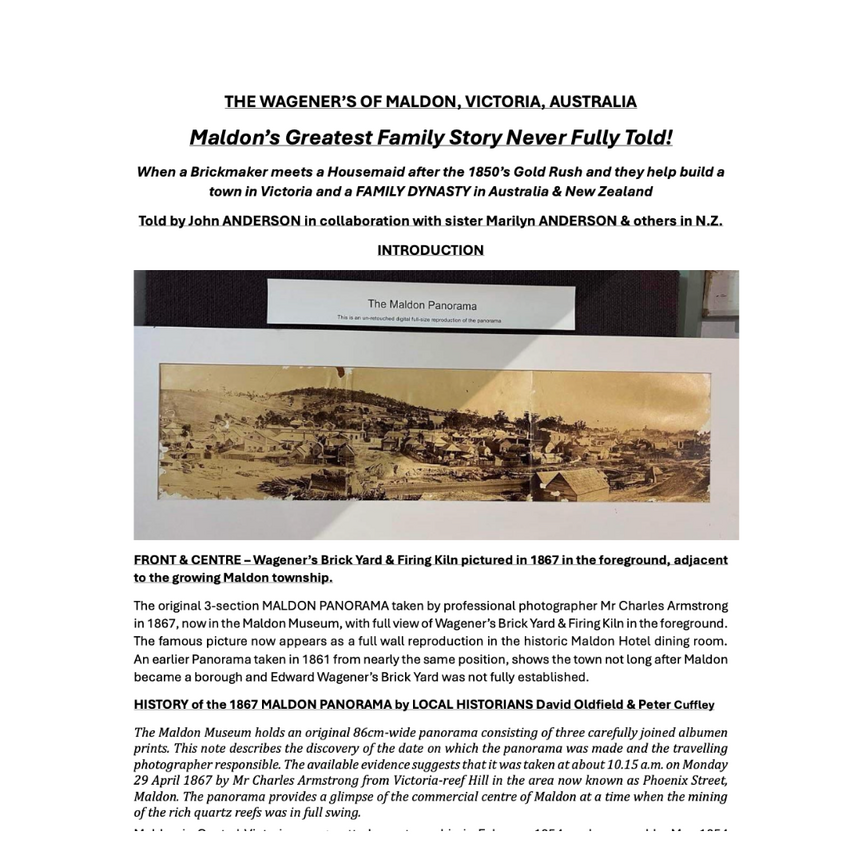
Click here 👆 to view
We've kept the stories here as they were handed down — and kept them honest. Both are part of who he was.
His Resting Place
Fred died on the 19th of March 1885 at Awanui, in the Far North of New Zealand, while visiting his son John William Henry. He was buried in the Subritzky family cemetery at the foot of Mount Camel, at Houhora — the same hillside where Old Sophie herself was laid to rest.There is a rightness to it. Fred had married into this family aboard a ship off the coast of Germany, more than forty years and half a world before. He had buried a son at sea, outlived a wife, and made and remade his life a dozen times across two countries. And at the very end, the Hanoverian soldier's son came to rest among the very people that one shipboard marriage had bound him to — the Subritzkys, in the Far North, beneath Mount Camel.He had travelled further than almost anyone in the family. And he finished at its heart.

Mount Camel, Houhora — the family cemetery where Fred was buried in 1885, among the family he had joined aboard the St Pauli. 1
Image credits
1. St John's, Lüneburg — by Unscheinbar (own work), via Wikimedia Commons, CC BY-SA 3.0.
Leave a Memory
Fred Spanhake is the ancestor three families share. Through his daughter Louisa, the Wageners of Maldon. Through his son John William Henry, back into the Subritzkys. And the Spanhake name itself, carried down the generations.If you descend from any of them — and you've got a story passed down, a photograph, a document, or a correction — this is the place to share it. Fred's page isn't finished, and it was never meant to be. It's not only ours — it's yours as well. Feel free to reach out.

Share a story, a photo, or an update about Fred.
The Maldon Story is a family project. It is not a business, it is not for sale.This page was built from the work of others.
Stephen Subritzky, whose "Subritzky Family History from 1785 to 1915" is the backbone of everything here, and who gave fifteen years to it.Mike Subritzky — "The Subritzky Family Legend", "Golden Book of Subritzky Nobility", "Subritzky Ships".John Anderson, whose "The Wagener's of Maldon, Victoria, Australia" - told in collaboration with sister Marilyn Anderson - traces the Wagener and Subritzky lines back through months of archive research in Maldon and correspondence across two countries.Maria Beniston (née Subritzky) · Alan Wagener · Bev Sharp · Laurel Jonkers (née Quelch) · Jenny Briars and Jenny Leith, "The Road to Sarau" · the Kaitaia Museum and the Alice Evans collection · the Maldon Museum, Victoria.